A story of exchange
Chinese noodle traditions meet changing life in Japan. Ramen’s identity grows through adaptation, ingredients and the places that serve it.
Ramen adventure 06 / 06
歴史と科学と、街の物語。
A noodle’s spring. A broth’s aroma. A dish shaped by exchange, invention and local pride. Pull up a stool and look a little closer.

Chinese noodle traditions meet changing life in Japan. Ramen’s identity grows through adaptation, ingredients and the places that serve it.
Chuka soba and ramen can refer to related dishes. A familiar-looking bowl can carry several histories in its name.
Momofuku Ando introduces Chicken Ramen. Convenient preparation creates a new setting for a noodle meal: the home pantry.
A cup changes both the container and the routine. Food design can be as much about how people eat as what they eat.
A miso bowl in Sapporo, shio in Hakodate and a Kitakata morning bowl invite different expectations. Regional identity leaves room for individual cooks.
Tradition keeps moving. Notice one detail, ask one question, and leave with a story that you can tell in your own words.
The anatomy of a bowl · interactive explorer
Build a conceptual bowl, then see which words describe the stock, seasoning and noodles. This is a learning model, not a recipe or ingredient certification.
Taste science
Different savory components can work together. Explore a simple ingredient pairing without pretending to calculate the taste of a real bowl.
Texture science
A noodle’s geometry changes the bite. It is separate from the cooking-firmness request.
Dough hydration and alkaline salts are part of the noodle maker’s toolkit.
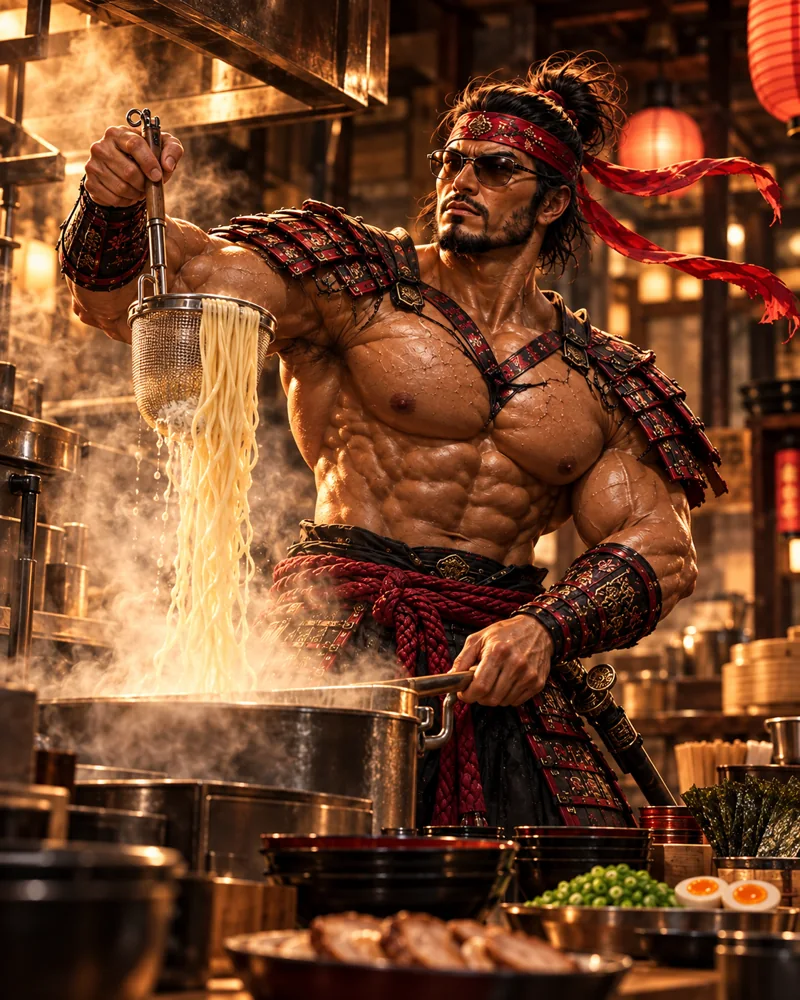
AI character illustration with a stylized map. Explore the linked regional notes for context.
「醤油」と「豚骨」は同じ分類ではありません。前者は主に味付け、後者はスープの材料。いつもの一杯を「出汁・タレ・香味油・麺・具材」に分けて観察すると、知っているはずのラーメンにも新しい発見があります。
地域名だけで味を決めつけず、その店の一杯を味わう。濃さ・塩味・脂・うま味を別々に言葉にしてみてください。
Take the umami field note →